Basement waterproofing starts with a plain question: where is the water coming from? In Eden Prairie homes the answer ranges from a leaking supply line to groundwater pushing through the floor, and the fix depends on which one it is. We are plumbers, so we handle interior drainage, sump systems and plumbing-related leaks. Excavation, foundation structural repair and masonry are other trades, and we say so when a job belongs to them.
Why basements take on water
Soil outside the foundation holds water after rain and snowmelt. When that water presses on the wall and floor, it is called hydrostatic pressure, and it finds the weakest spot: a crack, the joint where the floor meets the wall, a window well or a pipe penetration. Poorly aimed downspouts and soil that slopes toward the house make it worse.
Condensation is another cause, and it is often mistaken for a leak. Cold walls and pipes in summer sweat when humid air touches them, leaving damp patches without any cracks. Wiping the wall dry and taping a square of plastic to it overnight helps tell the difference: moisture on the room side of the plastic means condensation, and moisture behind it means water is coming through.
Common signs of basement water
Water at the floor-wall joint
A dark line or puddle along the base of the wall after rain.
Cracks with staining or mineral crust
White, powdery deposits mark where water has passed and dried.
Wet window wells
Water in a well that drains slowly can seep in around the frame.
A musty smell
Persistent dampness feeds mold and smells before you see it.
A sump pit that fills often
A busy pit means groundwater is rising around the foundation.
Rule out plumbing before anything else
Check the plumbing first, because it is the quickest and cheapest thing to rule out. The City says water meters in Eden Prairie are inside the home, usually in the basement near the water heater. So while you are downstairs, check the meter.
Use the City's overnight method. Record the reading at bedtime, use no water overnight with irrigation and water-using appliances off, read it in the morning, and a changed reading means a leak. If the meter moves, the water may be coming from a pipe, not the ground. Leak detection finds it, and a buried service line is covered by water line repair.
Also look at the water heater, washing machine hoses, the laundry sink and any toilets on the floor above. A slow drip from a supply line can look like seepage.
Interior drain tile and a sump
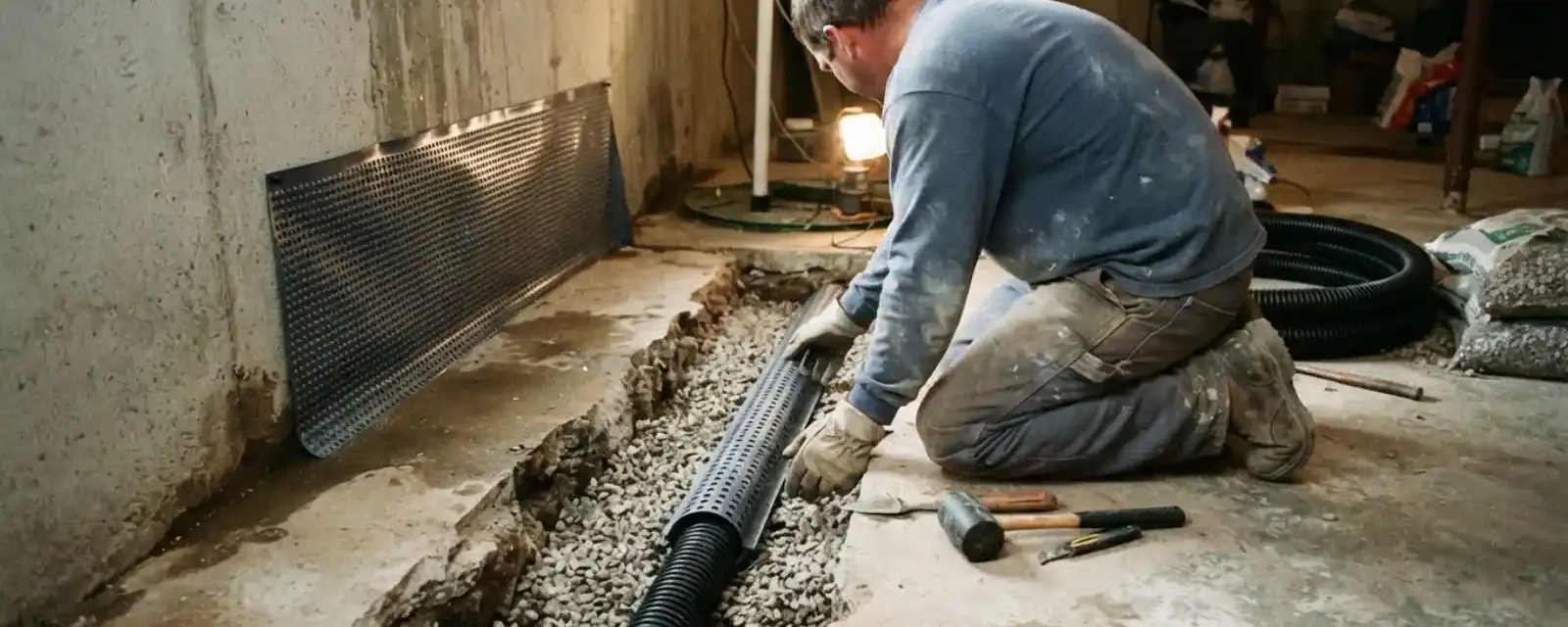
The most common fix for a persistent groundwater problem is interior drainage. A channel is cut along the floor edge, a perforated pipe is laid in gravel, and it carries water to a sump pit where a pump sends it out of the house. It does not stop water entering the soil outside, but it gives water a path away before it reaches the finished floor.
The sump pump is the working part of the system, so its condition matters. See sump pump repair for the failure points. Rules about where a sump pump may discharge vary, so ask the Utilities Division before changing or adding a discharge.
Exterior membrane, grading and downspouts
Exterior waterproofing means digging down to the foundation wall, cleaning it and applying a membrane, often with drain tile at the footing. It is effective but disruptive, because it needs excavation. That work belongs to excavation and foundation contractors, not to us.
You can often reduce water without digging. Extend downspouts several feet away from the house, keep the soil sloping away from the wall and keep window wells clear. The City says its storm system includes over 700 stormwater ponds, 687 stormwater basins and 209 miles of stormwater pipe, but that system is the public side. What happens along your own foundation is up to the grading you control.
Talk to a dispatcher about basement waterproofing
Dispatch answers 24/7 and books same-day appointments when one is open.
Crack repair and waterproof paint
| Method | Helps with | Limits |
|---|---|---|
| Epoxy or polyurethane crack injection | A single leaking crack | Does not stop new cracks or floor-joint seepage |
| Hydraulic cement patch | Small active leaks | Short-term in many cases |
| Waterproof paint or sealer | Light dampness and condensation | Fails under real water pressure and can peel |
| Interior drain tile and sump | Groundwater at the floor-wall joint | Needs a working pump and power |
Crack repair works for a single, stable crack. It does not help if the whole wall is wet. Waterproof paint can hide light moisture, but it cannot hold back water under pressure. Water behind the paint blisters and peels it. Structural cracks that widen, shift or step across masonry should go to a foundation specialist.
What a plumber can and cannot do
We can find leaking pipes, repair or replace sump pumps, install sump pits and ejector basins, add or clear interior drains, set up battery backups and connect discharge lines. We can also tell you if the water pattern points to plumbing or to groundwater.
We do not excavate, rebuild footings, repair foundation walls or do masonry. If the evidence points there, you will get a straight answer and a recommendation for the right trade. For drainage lines that clog, drain cleaning is a separate service, and new floor drains or ejector basins fall under plumbing installation.
What drives the cost of basement drainage work
Cost depends on how much floor is opened, the length of drain tile and the pump setup. We give you a clear price before work starts.
Homeowner policies often exclude groundwater seepage and may cover only sudden water backup with an endorsement, so ask your insurer what applies. Photographs and meter readings help. Want your real number for your house? Call (952) 866-9120 and we will quote the job before work starts.
We work on basements across Eden Prairie, including the 55344, 55346 and 55347 ZIP codes, and we also serve nearby Chanhassen homes.
Interior drains and sump systems are plumbing work, so the Minnesota Plumbing Code, Minnesota Rules chapter 4714, sets the standards for how that piping is installed.
Basement Waterproofing questions in Eden Prairie
Dry the wall and tape a square of plastic to it overnight. Moisture on the room side means condensation. Moisture behind the plastic means water is coming through.
Not for real water pressure. It can handle light dampness, but groundwater pushes it off the wall. It works best as a finish over a basement that is already dry.
Yes. The City says meters are inside the home, usually in the basement. Use the overnight test, and if the reading changes, a pipe may be leaking.
It collects water at the floor-wall joint and sends it to a sump pit, where a pump removes it. It does not stop water entering the soil but keeps it off the floor.
No. We handle interior drainage, sump systems and plumbing leaks. Excavation, foundation repair and masonry are other trades.
Rules vary, so ask the Utilities Division before changing a discharge. The City operates over 700 ponds, 687 basins and 209 miles of storm pipe, which is the public system.
What to check before you call
Note where and when water appears, such as after rain or during snowmelt. Read the meter at bedtime and in the morning. Photograph cracks and stains, and test the sump pump by pouring water into the pit.