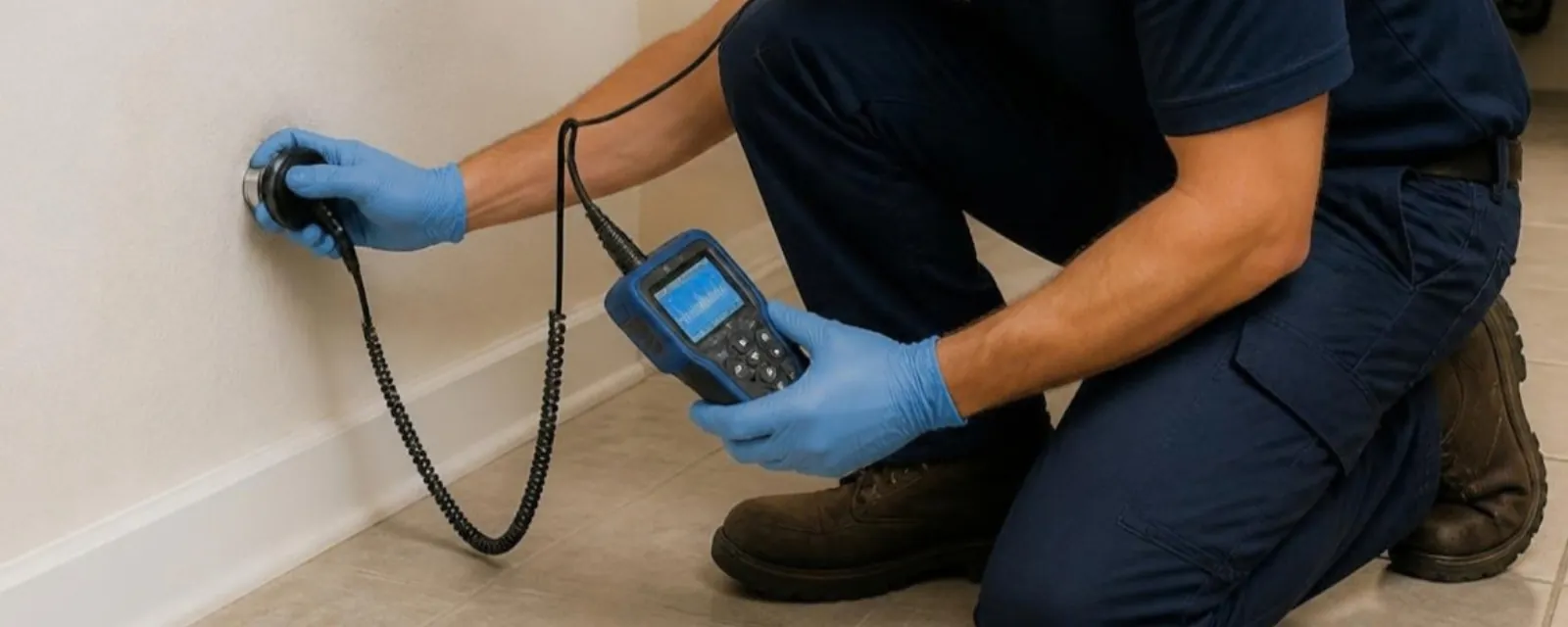
Electronic leak detection in Eden Prairie, MN is a set of instruments, not one gadget. Acoustic listening devices hear water escaping a pipe, thermal cameras show temperature differences, moisture meters read dampness in materials, and pressure tests prove whether a line holds. A plumber picks the method that fits where you suspect the leak, then marks the spot so repair can be small and targeted. No single tool finds everything, and each has limits you should know about.
The tools, and what each one finds
Different leaks leave different clues, so plumbers carry several instruments and switch between them. Here is what each does on a typical visit.
| Method | What it detects | Best for | Main limit |
|---|---|---|---|
| Acoustic listening | The hiss or hum of water under pressure | Supply lines, slab leaks | Noisy sites and plastic pipe muffle sound |
| Ground microphone | Sound traveling up through soil | Underground service lines | Wind, traffic and depth affect accuracy |
| Thermal imaging | Warm or cool patches on surfaces | Hot water lines, radiant floors | Shows temperature, not water itself |
| Moisture meter | Dampness in drywall, wood or concrete | Confirming a wet area | Reads only near the surface |
| Tracer gas | A harmless gas escaping the pipe | Hard cases and tight joints | Needs the line drained and filled |
| Pressure test | Whether a closed line holds pressure | Proving a leak exists | Does not say where the leak is |
Listening devices and ground microphones
A leak under pressure makes noise, even when you cannot hear it. A technician places a sensitive sensor on a valve, a fixture or the floor and listens through headphones for the pitch and volume of the sound. The loudest point is usually closest to the leak.
Outdoors, a ground microphone is walked along the surface above a buried line. Sound tends to travel along metal pipe, so the loudest spot on the ground may sit several feet from the true leak. Good technicians confirm with a second method instead of digging on one reading.
Thermal imaging and moisture meters
A thermal camera shows surfaces as a color map of temperature. A hot water leak under a floor shows as a warm stripe, and evaporating water often shows as a cool patch. The camera does not see water, only the temperature difference it causes.
A moisture meter confirms what the camera hints at. Pins or a flat pad pressed to drywall, subfloor or concrete read the moisture content. Together they let a plumber mark a wet area on a wall without making a single cut.
Tracer gas and pressure tests
When a leak is quiet, the plumber may use a pressure test first. The line is isolated, filled or pressurized, and a gauge is watched for a drop. A falling gauge proves a leak, but not its location.
For stubborn cases, a harmless tracer gas can be introduced into an emptied line, and a sensor sniffs along the surface for escaping gas. This is slower and used when listening and thermal imaging leave doubt. Ask what method is planned before the visit.
Rather have a plumber look at it?
Our 24/7 line is open now, and same-day appointments are available when a slot is open.
How the visit usually runs
A typical visit starts with questions, then a meter check, then instruments. The plumber will want to know where you saw the first sign: a stain, a sound, a bill increase.
- Talk through symptoms, pipe age and any recent work.
- Check the meter and shut off valves to see if water use continues.
- Isolate sections of pipe to narrow the search.
- Use listening, thermal or moisture tools to mark the likely spot.
- Confirm with a second method, then explain repair options.
Our leak detection visits follow this order so the repair, not the search, is where most of the work goes.
Limits and false positives
Instruments can mislead. A running dishwasher, a neighbor's irrigation or a noisy fridge ice maker can all produce sounds that look like leaks. Condensation on a cold pipe can read as a moisture problem. A dry concrete slab can hide water beneath its surface.
This is why honest technicians confirm. If one tool says leak and another does not, expect a second look instead of a confident guess. A good report names the method used, the reading, and how sure the plumber is.
Before the technician arrives
Prepare a quiet house. Turn off water-using appliances, shut off any irrigation controller, and tell everyone to avoid flushing or running taps during the listening step. Clear access to the water meter and the main shutoff.
Locate the meter and note its reading. If you can, write down the dates of your last few water bills and any change in pressure or sound. Mention stains, warm floor spots or a sudden jump in your bill. These details help the plumber choose the right instrument first.
Eden Prairie local note: where your responsibility starts
The City of Eden Prairie says property owners maintain all piping on their property, including the underground water service to the property line. So a leak in the buried line between the street and your house is generally an owner repair. Ask a plumber to locate it electronically before anyone digs.
The City also explains that most meters have two shutoff valves, one on each side, and that the curb stop is the street-side valve the City uses to shut off service. Keep the curb stop uncovered, and know where your meter valves are. When the leak is on your side, the meter valves are your first stop.
When the leak is in the buried line
If the instruments point to the buried service, the next step is a repair plan, which may be a spot dig or a replacement. Our crews handle water line repair after confirming the leak with a second method, and we quote the job before work starts.
Call 811 before any excavation. Minnesota's one-call service marks buried utilities for free, and digging without marks risks hitting gas, power or fiber. Rules for permits vary, so ask the Eden Prairie building department about your job.
Where we work and how to book
Our dispatch covers Eden Prairie, MN around the clock, including after-hours calls when a leak is flooding a room. We also cover Minnetonka and Bloomington homes. If water is running where it should not, shut off the main at the meter, keep people away from wet electrical areas, and call (952) 866-9120.
Electronic testing finds the leak, and the repair is then done to the standards of the Minnesota Plumbing Code, Minnesota Rules chapter 4714.
Eden Prairie homeowner questions
No. Listening devices, thermal cameras and moisture meters are non-invasive, so they read from the surface. Opening a wall happens only after the leak is located and you approve the repair.
Yes, but plastic carries sound poorly, so listening works over shorter distances. Plumbers often add a pressure test, thermal imaging or tracer gas to narrow the spot.
It is usually accurate within a few feet when conditions are quiet, but soil type, depth and traffic noise affect it. A second reading or method confirms the dig spot.
Usually not. The plumber needs water under pressure to listen for leaks, and will tell you when to turn valves off. Shut the main only if water is actively flooding.
The City says property owners maintain all piping on their property, including the underground water service to the property line. For a leak at the curb stop or meter, call the City Utilities Division on weekdays, and ask about your specific line.