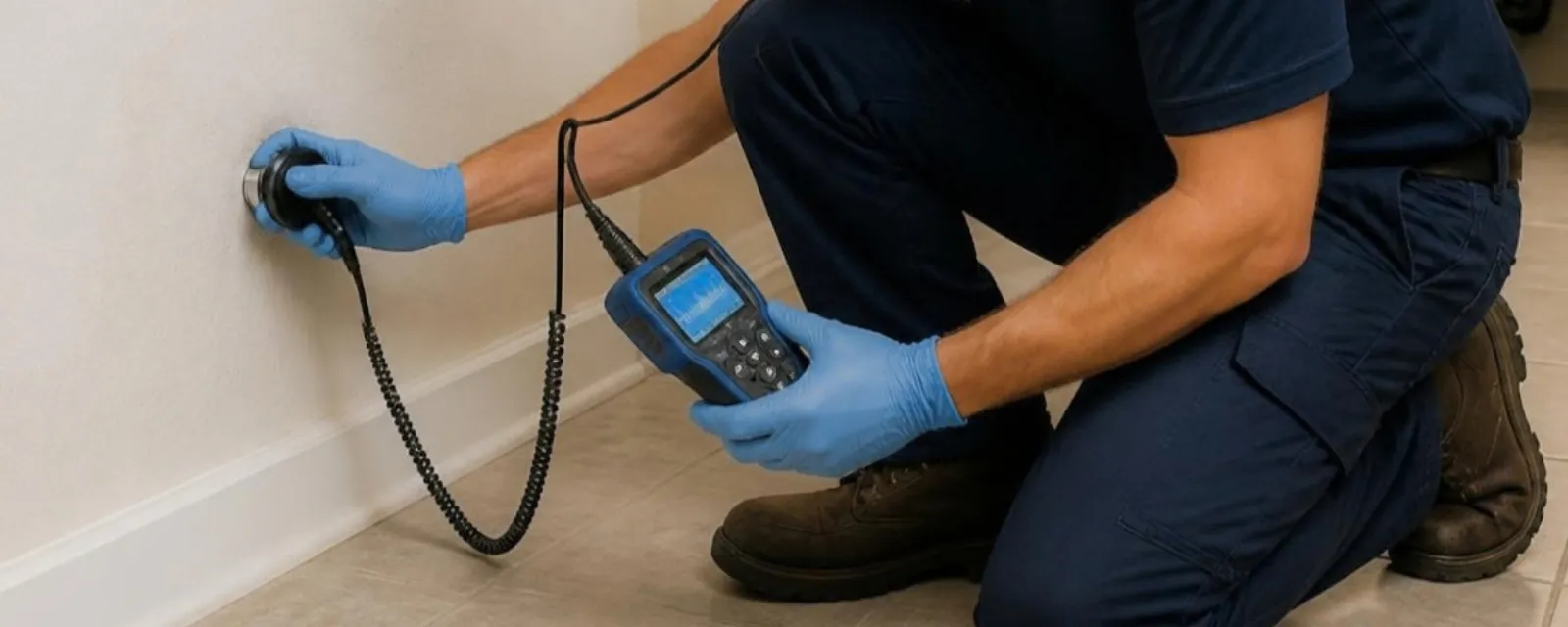
Dye for leak detection works best on toilets: drop food coloring or a dye tablet into the tank, wait without flushing, and if color shows up in the bowl, the flapper is leaking. In Eden Prairie, MN, that single test explains a large share of unexplained water use. Dye also helps trace drain and fixture leaks. It cannot find a pressurized supply leak inside a wall or under a slab, which needs a meter check or listening equipment.
The toilet tank test, step by step
A toilet that leaks silently can waste water all day without a sound. The test takes minutes and costs almost nothing.
- Lift the tank lid and set it on a towel.
- Add ten drops of dark food coloring, or one dye tablet, to the tank water.
- Do not flush. Wait twenty minutes, and longer if you can.
- Look in the bowl. Colored water means water is slipping past the flapper.
- Flush to clear the dye before it stains porcelain.
Do the test when no one is home to flush by habit. If the bowl stays clear, the flapper is probably sealing.
Why the flapper is the usual culprit
The flapper is the rubber seal at the bottom of the tank. Over time it hardens, warps or collects mineral film, and it stops sealing against the flush valve seat. Water then trickles into the bowl, the fill valve tops up the tank, and the cycle repeats.
A new flapper is a cheap part and a short job. If the seat itself is pitted, a flapper swap will not hold, and the next step is toilet repair with a new flush valve or fill valve.
Dye for drain and fixture leaks
Dye is useful anywhere water leaves a fixture and you want to know where it goes. Run a few drops of a bright color into a sink, tub or floor drain, then check the basement ceiling, the crawl space or a cleanout for stained water.
For a suspected slow drain leak, put colored water in the fixture, let it run, and watch the pipe below. A slow drip of tinted water at a trap or a joint settles the question. Use a flashlight and a dry paper towel pressed to the joint, since colored drips are easy to miss on white pipe.
Tubs, showers and pools
Tub and shower leaks often start at the drain gasket, the overflow plate or a cracked grout line. Plug the tub, fill it past the overflow, then add dye and watch the ceiling below or the access panel for color.
For pools or spas, plumbers use small amounts of leak-trace dye near suspected cracks or fittings and watch whether the dye is pulled toward a gap. Keep it brief and calm: stir nothing and shut off the jets, since moving water scatters the dye.
| Where you use dye | What you do | What the result means |
|---|---|---|
| Toilet tank | Add color, wait, do not flush | Color in the bowl means a flapper or seat leak |
| Sink or tub drain | Pour colored water, check the pipe below | Stained drips mean a trap or joint leak |
| Tub overflow | Fill past overflow, add dye, check below | Color on the ceiling means a gasket leak |
| Spa or pool wall | Place dye near a suspect crack | Dye pulled into a gap means a leak path |
Rather have a plumber look at it?
Our 24/7 line is open now, and same-day appointments are available when a slot is open.
What dye cannot find
Dye needs a visible path out of the pipe. It does nothing for water under pressure that leaks into a wall cavity or beneath concrete. It also cannot show a leak in the service line outside your house, or a slow weep at a copper joint inside a closed wall.
If your bill is high and the toilet dye test comes back clean, move to a different method. The water meter, listening equipment and thermal imaging each answer questions that dye cannot.
Dye versus the meter test
The meter test is broader: it tells you whether any leak exists in the house, but not where. Dye is narrower: it tells you where one particular leak sits, if you already suspect a fixture.
A sensible order is meter first, then dye on the likely fixtures. If the meter keeps moving while every toilet passes the dye test, you are probably dealing with a supply leak or a faucet and need leak detection with proper equipment.
Eden Prairie local note: the City's own leak checks
The City of Eden Prairie describes two simple checks. For the whole house, record the meter reading at bedtime, use no water overnight with irrigation and water-using appliances off, then read it in the morning. A changed reading means water is leaking somewhere. For toilets, it suggests dye tablets or food coloring in the tank, and it names a deteriorated flapper as a common cause.
The City also gives typical use: one person about 5,000 to 7,000 gallons per quarter, and a family of three about 22,000. If your quarterly use sits far above that for your household size, run both checks before assuming a problem outside the house. Your meter is inside the home, usually in the basement near the water heater.
Clearing up the results
A clean dye test and a moving meter is the most useful result, because it narrows the search. A colored bowl is a quick win you can often fix the same day.
If you choose to repair the flapper yourself, shut the toilet's supply valve, flush to drain the tank, and match the flapper to your flush valve size. Take the old one to the hardware aisle to compare. If the leak keeps coming back, stop and call. Our team also covers Bloomington and Chanhassen homes with the same 24/7 line.
When the answer is not under the toilet lid
Some leaks give hints without dye: a musty smell, warm spots on the floor, a hissing sound at night, or a wet patch in the yard where the grass grows greener. Do not ignore a bill that jumps with no change in habits.
If you suspect a hidden leak, call (952) 866-9120 and describe what you saw during the dye and meter tests. The more specific you are, the faster a plumber can pick the right method. Same-day appointments are offered when available.
Dye testing is only a clue, and the repair that follows should meet the standards of the Minnesota Plumbing Code, Minnesota Rules chapter 4714.
Eden Prairie homeowner questions
Twenty minutes is the minimum, and an hour or overnight is better for a slow leak. Do not flush during that time. If color appears in the bowl, the flapper or seat is letting water through.
A few drops in a tank are harmless to the toilet and diluted in the flush. Flush right after the test so dye does not sit and stain the porcelain. Leak-trace tablets sold for this purpose work the same way.
No. Dye needs a path out of the pipe that you can see. Slab and wall leaks are found with a meter test, listening gear, thermal imaging or a pressure test.
Run the overnight meter test. If the reading changes, check faucets, the water heater relief valve and any outdoor line, then call for leak detection if the source is still unknown.
Record your meter reading at bedtime, use no water overnight with irrigation and appliances off, and read it again in the morning. A changed reading means a leak. For a toilet, add dye tablets or food coloring to the tank and look for color in the bowl.