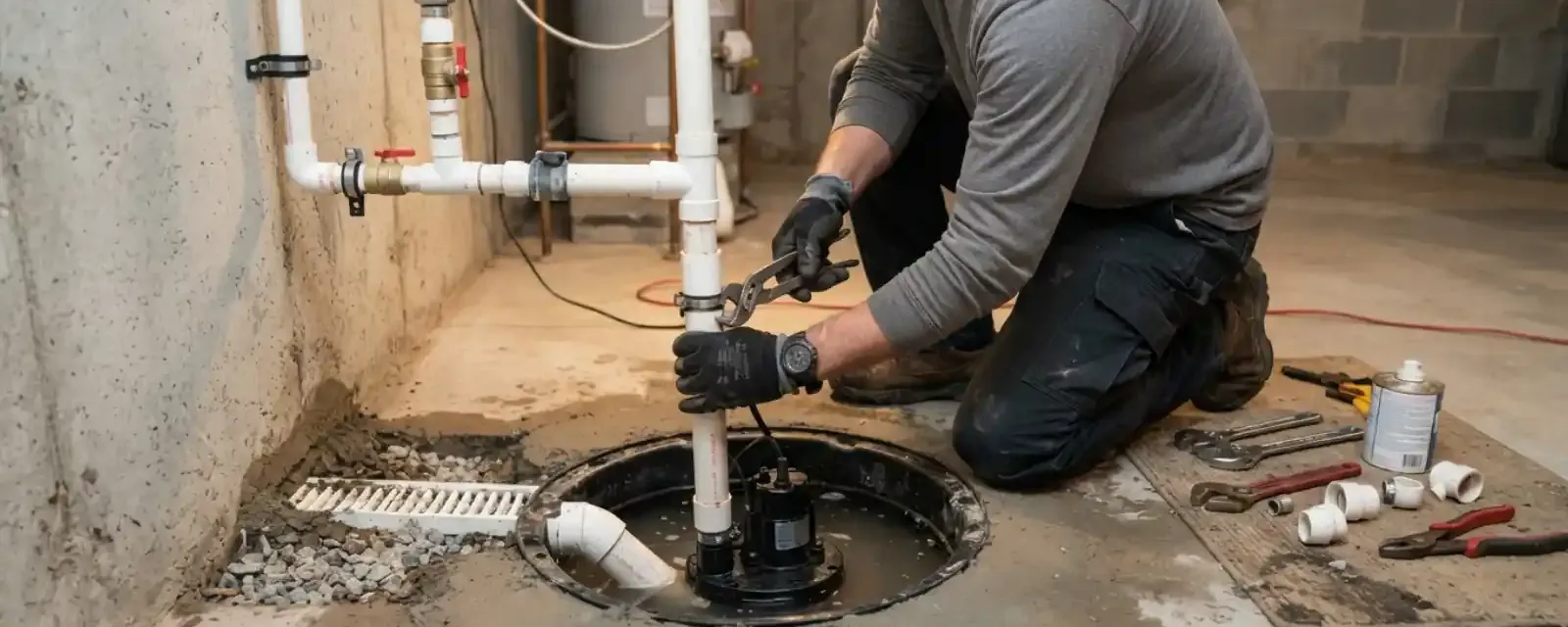
A battery backup sump pump is a second pump, or a pump built into the same unit, that runs off a deep-cycle battery when the power goes out or the main pump fails. In an Eden Prairie, MN basement, it is the part that matters during a thunderstorm that also knocks out the electricity. Expect it to run for a limited time, not forever, so sizing and testing decide whether it saves your floor.
Why the main pump is not enough during a storm
A standard sump pump plugs into a wall outlet. When a storm takes out the grid, the pump stops at the moment groundwater is rising fastest. The pit fills, then water spills across the floor, and carpet, drywall and stored boxes soak it up.
The pump itself can also fail with the power on. A stuck float switch, a burned motor or a clogged intake will leave the pit overflowing even on a dry day with lights working. A backup covers both cases, which is why many homeowners add one after their first close call.
Two kinds of backup: separate pump or integrated unit
The most common setup is a second, smaller pump mounted in the same pit a few inches higher than the main pump. Its float switch rises only if the main pump fails to keep up, and it runs from a 12 volt battery through a controller. This gives you two independent pumps and a clear failure path.
The other design is an integrated unit that combines primary and backup pumps in one assembly. It is tidy and takes less room, but a single housing or controller failure can take out both pumps. Check how the manufacturer describes that risk before you buy.
A third option is a water-powered backup that uses municipal water pressure to push water out. It has no battery to maintain, but it uses a lot of water while it works and some homes have restrictions on it. Ask your plumber whether it fits your situation.
Sizing the pump, battery and pit
A backup pump rated at a few thousand gallons per hour moves less water than a good main pump, and that is expected. The goal is to hold the line until power returns. Size it for your inflow, not for the biggest number on the box.
The battery is the limit. A deep-cycle marine battery in the typical range gives you several hours of intermittent pumping, and when water flows steadily it may run down in much less. A bigger battery bank or a second battery extends this, and an inverter-style system can add more.
Pit size matters too. A narrow pit makes the pump cycle on and off quickly, which wears the motor and drains the battery. A wider, deeper pit gives each cycle more water to move before the float trips again.
| Backup type | Runs on | Main trade-off |
|---|---|---|
| Second pump in same pit | 12 volt battery | Needs battery care and a charger |
| Integrated primary and backup unit | Mains plus battery | One housing can fail both pumps |
| Water-powered backup | Municipal water pressure | Uses water and may face local limits |
| Generator-fed primary pump | Portable or standby generator | Needs fuel and someone at home |
What to ask the installer
Ask for the pump's rated flow at the height your discharge pipe rises, because flow drops sharply with lift. Ask how long the battery will run at that rate and what happens when it is empty. Ask where the controller and charger will mount and whether they are out of the damp zone.
Ask about the alarm. A good setup sounds a beep or flashes a light when the backup runs, when the battery is low or when the water is high, so you hear about trouble before you see it. A silent system fails silently.
Ask who tests the setup after installation. A crew that fills the pit and watches both pumps trip, then pulls the plug on the main pump to prove the backup starts, has actually shown you it works.
Rather have a plumber look at it?
Our 24/7 line is open now, and same-day appointments are available when a slot is open.
Testing and maintenance that keep it working
Most backups fail because nobody checked the battery. Twice a year, and before spring melt, pour a bucket of water into the pit until both floats lift, and watch the discharge. Unplug the main pump for the second test and confirm the backup runs and the alarm sounds.
Check the charger lights every few months and clean the battery terminals. Most deep-cycle batteries wear out in a few years of service, so plan to replace yours on a schedule and write the date on it.
Pull the pump now and then to clear grit and check the intake screen. If your system uses a check valve, listen for the slap of water falling back after each cycle. A weak check valve makes the pump cycle more often than needed.
- Fill the pit Pour a bucket of water in slowly until the main float rises.
- Watch the discharge Confirm water leaves the house through the pipe outside.
- Pull the main plug Unplug the primary pump while the pit is still high.
- Confirm the backup Check that the backup starts and the alarm sounds.
- Restore power Plug the main pump back in and look at the charger lights.
Discharge: where the water goes matters
A backup pump needs its own discharge pipe or a tee into the main one with a second check valve, so the two pumps do not push water back through each other. Keep the pipe pitched away from the foundation and the outlet clear of snow and ice. A frozen outlet in January turns a working pump into a pit that overflows.
Rules about where sump water may go vary, and we do not state them here. Ask the City of Eden Prairie Utilities Division before you route a discharge line. Do not assume a sump pump may tie into the home's waste line, and ask before you connect anything to it.
After the installation, we handle sump pump repair and the related basement waterproofing questions that come up when a pit keeps filling. We also cover Chanhassen and Minnetonka homes on the same 24/7 line, and you can call (952) 866-9120 if a pit is filling right now.
Eden Prairie local note: storm water and who to ask
The City of Eden Prairie says its Utilities Division oversees water, sanitary sewer and storm sewer. For storm sewer, the City lists over 700 stormwater ponds, 687 stormwater basins and 209 miles of stormwater pipe, which is the system that carries rain and runoff away from streets and lots.
That scale is why sump discharge is worth asking about before you install. If you are not sure where your discharge may go, ask the Utilities Division, which answers weekday questions from 7 a.m. to 3:30 p.m. For leak or frozen-pipe reports after 3:30 p.m. on weekdays and on weekends, the City directs callers to the Police Department.
When a backup is not the fix
If the pit fills every day, not just in storms, a backup does not solve the real problem. Look at downspouts, grading near the foundation and cracks in the wall. Fix those first, because a pump that cycles constantly wears out sooner and drains its battery faster.
A pump that runs but the water level does not drop usually has a failed check valve, a blocked discharge or an airlock. Call for repair before storm season. Ask about a permanent drainage fix if the water seems to come in through the floor joint.
Eden Prairie homeowner questions
It depends on the battery, the pump and how fast water enters the pit. A typical setup can run for several hours with intermittent cycling and far less under constant flow.
No. It is built for short outages. A backup pump is smaller and the battery is limited, so the main pump should remain the workhorse.
Test it at least twice a year and before spring melt. Fill the pit, unplug the main pump and confirm the backup and the alarm both work.
Requirements vary by job and by city. Ask the Eden Prairie building department before work starts, and expect a licensed plumber to know when a permit is needed.
Rules vary, so ask the City Utilities Division before you route a discharge line. Ask before tying into any drain, and keep the outlet pitched away from the foundation.
It usually means the backup is running, the battery is low or the water is high. Check the pit and the main pump first, then check the charger.