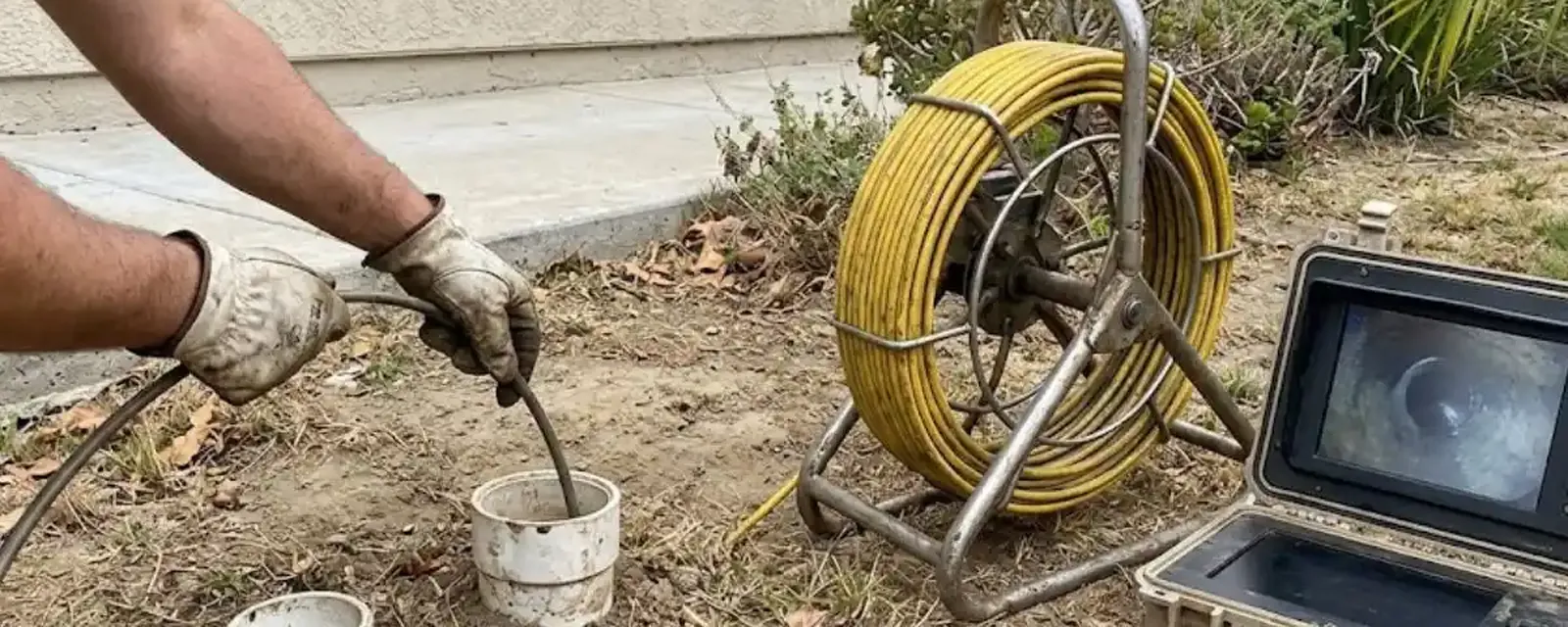
A sewer inspection puts a small camera inside the line that carries waste out of your Eden Prairie, MN home, so you can see its condition instead of guessing from symptoms. It is the planned, low-pressure way to learn whether a pipe is sound, rooted, sagging or cracked. If you have an active backup instead, our 24/7 dispatch takes that call first.
How a camera inspection works
A technician feeds a flexible push cable with a camera head into the line through a cleanout, a pulled toilet or a roof vent. The head carries a light and is self-leveling, so the image stays upright even as the cable twists through bends. A transmitter in the head lets a surface locator mark the spot and depth of anything of interest.
The technician watches a monitor as the head moves, pausing at joints and defects. When something is worth noting, they mark the position on the surface so a repair crew can find it without guessing. Our sewer line cleaning page covers the clearing that sometimes comes first.
What the camera can find
Common findings
Bellies
A sag where the pipe has settled and holds water, which collects paper and solids.
Offsets and separated joints
Two pipe sections that no longer line up, leaving a lip that catches debris.
Root intrusion
Fine roots entering at a joint, or a thick mat filling the pipe.
Cracks and breaks
Longitudinal or circumferential cracks, sometimes with soil visible behind them.
Scale and corrosion
Rough buildup inside old cast iron that narrows the pipe.
Collapsed sections and tie-ins
A crushed length, or a side connection that was cut in badly.
When to schedule one
You do not need a backup to justify an inspection. These are the situations where a camera pays off:
- Buying a home, especially an older one, before closing
- Repeated backups or slow drains that return after cleaning
- Before lining, digging or any repair, so the work is based on a picture
- After a storm or ground movement that could have shifted pipe
- Before landscaping, tree planting or a driveway project over the line
Per the City, most Eden Prairie homes date from the 1970s onward, with some older farm-era buildings. That mix means a home in the neighborhood might have a cast iron or clay line, while a newer one probably has plastic. The age of the house tells you what to expect, and the camera tells you what is real.
Access: the cleanout matters
A cleanout is the cap on a pipe at the foundation or in the yard. With one, the technician can enter the line without moving fixtures. Without one, they may have to pull a toilet, which takes longer and can limit how far the camera reaches.
If you are scheduling an inspection, find the cleanout in advance and clear a path to it. If the line is full of roots or grease, a cable or jet pass may be needed first so the lens can see. That is where hydro jetting often comes in.
Talk to a dispatcher about sewer inspection
Dispatch answers 24/7 and books same-day appointments when one is open.
What you can expect to see and ask for
Ask to watch the monitor while the camera runs. Ask for the recording or still images of every defect, along with a note of where each one sits and roughly how deep the pipe is. A good report ties the pictures to the locator marks so you can compare them later.
Keep the footage. If a later repair, a buyer or an insurer asks what condition the line was in, the recording answers it.
Inspection versus cleaning
Cleaning removes a blockage, and an inspection tells you why it formed. A cleaned line can still be cracked, bellied or rooted at a joint, so the same clog returns. For everyday sink and tub clogs, drain cleaning is the right visit, and the camera is the follow-up when clogs repeat.
Reading the results
| What the camera shows | What it means | Usual next step |
|---|---|---|
| Light roots at a joint | Small opening, early stage | Cut roots, then monitor |
| Mat of roots or scale | Line is restricted | Clean, then consider repair |
| Belly holding water | Pipe has settled | Spot dig or replacement, cleaning in the meantime |
| Offset or separated joint | Pipe sections have shifted | Spot repair or lining if aligned |
| Crack or hole | Leak or soil entering | Repair or lining after assessment |
| Collapse | Section has failed | Dig or pipe bursting |
Not every finding needs action. Cosmetic scale and slight roots may call for a watch-and-clean plan, while a collapse or deep belly needs repair. Sewer line repair lays out the options.
Who maintains which stretch
The Eden Prairie sewer system
The City's Utilities Division oversees water, sanitary sewer and storm sewer, including 262 miles of sanitary main. It does not state who owns or maintains a home's sewer service line. If your inspection finds a defect toward the street, ask the Utilities Division who maintains that section before you commission a repair.
What a sewer inspection costs
Homeowner policies usually exclude wear, roots and gradual leaks, and an inspection report may help you discuss a claim, so ask your insurer. Want your real number for your house? Call (952) 866-9120 and we will quote the job before work starts.
Where we inspect
We inspect lines in 55344, 55346 and 55347 in Eden Prairie, and also serve Minnetonka and Hopkins homes.
Questions about inspections
A camera inspection is observation only, and any repair it leads to follows the standards of the Minnesota Plumbing Code, Minnesota Rules chapter 4714.
Sewer Inspection questions in Eden Prairie
A single line with a good cleanout is usually a short visit, but length, bends and the need to clean first all change it.
It will show one, but a heavy blockage may need cleaning first so the camera can pass.
It is a sensible step for an older home, since the City says most homes date from the 1970s onward and older lines may be cast iron or clay. A recorded inspection shows the condition before you close.
Ask for it before the visit. Footage and stills with locator marks are useful for repairs, buyers and insurers.
Cleaning clears a blockage. An inspection shows the pipe's condition, including what caused the blockage.
Ask the City's Utilities Division. It oversees the sanitary sewer system but does not state who maintains a home's service line.
What to have ready when you call
Find the cleanout and clear a path to it. Note any symptoms, past backups or earlier camera work, and tell us whether the inspection is for a purchase, a repair plan or a recurring clog. If an inspection is tied to a closing date, say so when you book.