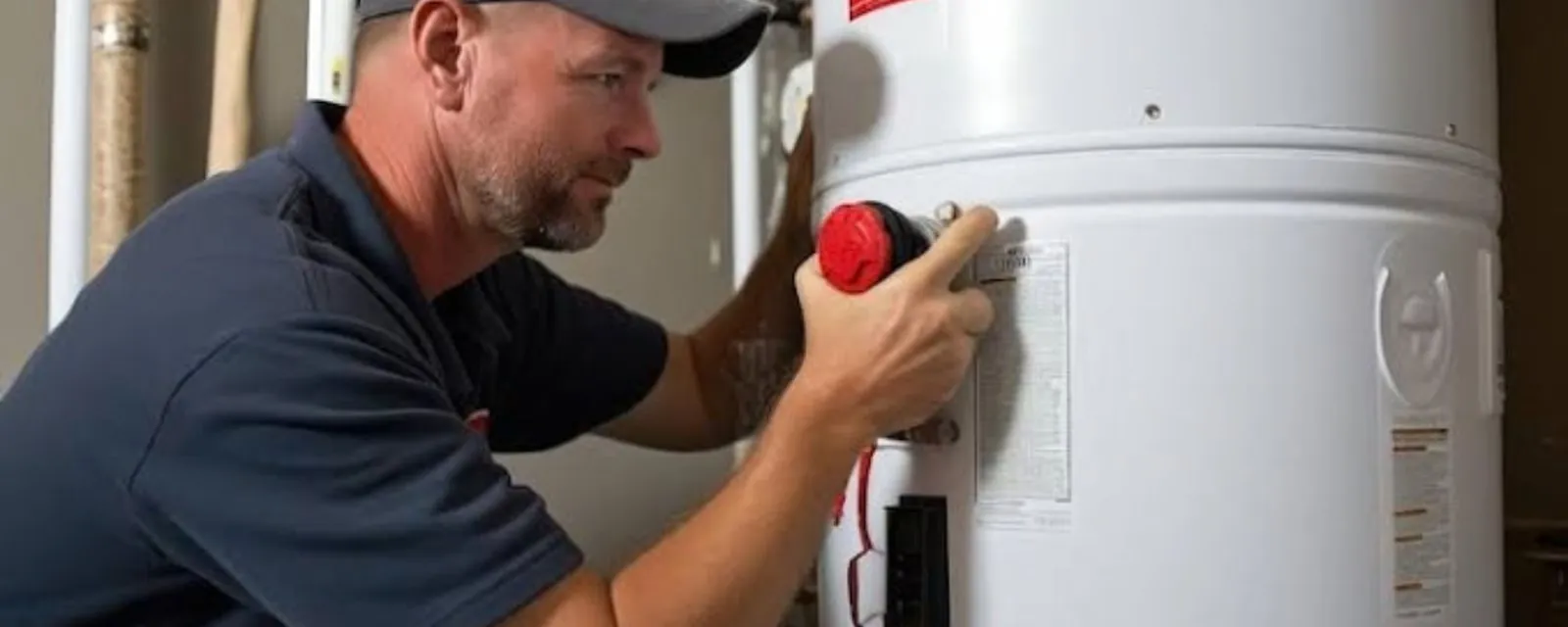
Gas hot water heater installation in Eden Prairie, MN costs more or less depending on four things that electric heaters do not have: a flue, a gas supply, a supply of air for burning, and sometimes a condensate drain. A like-for-like swap is the simple end. Moving the heater, changing the vent path or upsizing the gas line pushes the job toward the other end.
If you ever smell gas, leave the building first.
Gas safety comes before cost
The smell of rotten eggs, a hissing sound near a gas fitting or a pilot that keeps blowing out are all warnings. Leave the building right away and call the gas utility or 911 from outside. Do not flip switches, use phones or light flames inside, and do not return until responders say it is safe.
A carbon monoxide alarm that sounds means getting everyone outside and calling 911. Both hazards are why gas heater work is a job for a licensed plumber, with every connection leak-tested before the unit is fired up.
The cost drivers that only gas heaters have
Four items separate gas installs from electric ones, and each shows up as its own line on a good quote.
A heater with an atmospheric vent uses a metal flue that rises on its own, which keeps equipment simple. Power-vent and condensing models use fans and plastic pipe that can run sideways through a wall. They are more efficient, but they ask for electricity, a drain and clear space outside.
Gas line size and the shutoff
Gas heaters pull a lot of fuel when the burner is on. If the old heater was small and you step up in size, or if you add a furnace or range on the same line, the pipe may be undersized. A plumber checks pipe diameter and length against the new unit's rating.
Every gas appliance needs a shutoff valve within reach, and a drip leg, which is a short capped pipe that catches debris before it reaches the burner. If either is missing, the installer adds it. Joints get tested with a leak solution or a pressure gauge, not by smell.
Combustion air and the closet problem
A gas burner takes air from the room and sends exhaust up the flue. In a small closet with a louvered door or a sealed basement room, the heater can run short of air, burn poorly and back-draft exhaust. Tight modern homes make this more likely, because they leak less air than older ones.
The fix may be louvers, a duct to the outside or a different location, and each adds cost. A sealed-combustion model draws its air from outdoors through a pipe, which sidesteps the problem in tight spaces.
Rather have a plumber look at it?
Our 24/7 line is open now, and same-day appointments are available when a slot is open.
Condensate, drains and the old tank
Condensing units and many high-efficiency models drip acidic water as they run. That water needs a floor drain, a pump or a neutralizer cartridge, and the installer may run a small line to a laundry drain.
The relief valve also needs a drain. The pipe must end where hot water cannot hurt anyone, and it cannot be capped or plugged. Hauling away the old heater and sealing the old vent opening are part of the job too. Ask for these lines separately on the quote for water heater installation and replacement.
| Gas install item | Why it matters | Typical effect on the job |
|---|---|---|
| Flue or vent run | Carries exhaust out safely | Longer or new vent adds labor |
| Gas supply pipe | Must feed the burner | Upsizing adds parts and time |
| Combustion air | Burner needs room air | Louvers or ducts may be needed |
| Condensate drain | Condensing models only | Drain line or neutralizer |
Code, permits and who to ask
Gas water heater work sits under the Minnesota Plumbing Code, Minnesota Rules chapter 4714, and under local permit rules. We do not list the code requirements here, because they depend on the model and the house. Ask the Eden Prairie building department what your job needs, and ask your installer who will pull any permit.
A licensed plumber knows how to size the vent, test the gas line and set the relief piping. A homeowner may do some plumbing work on a house they own and live in, but gas and venting are where a mistake costs far more than the saved labor. We cover Bloomington and Chanhassen on the same 24/7 line, and you can call (952) 866-9120 for a written scope before work starts.
Eden Prairie local note: soft tap water and licensed help
The City of Eden Prairie says it softens its water with lime at the treatment plant. Untreated well water averages roughly 21 grains per gallon, and the tap averages about 5 grains per gallon. Less scale builds up inside a tank heater than with untreated hard water, but a tank still collects sediment, so flushing and anode checks still matter.
On licensing, the Minnesota Department of Labor and Industry says a plumbing contractor must have a licensed master plumber as its responsible individual and must keep a bond and insurance. DLI's lookup searches by the full license ID, so ask for it before you hire.
How long a gas tank lasts and when to replace it
A gas tank heater typically lasts roughly eight to twelve years. Signs of trouble are rust at the base, water around the tank, rumbling sounds from sediment, a flame that burns yellow instead of blue and soot around the draft hood. Any of these is a reason to have it inspected.
Scale shortens life where water is hard. Because the City's tap water averages about 5 grains per gallon after lime softening, scale builds more slowly here, and a regular flush and an anode rod check can help the tank reach the upper end of its range.
Questions worth asking at the quote
Ask for the model, the vent type and where the vent will terminate outside. Ask about the gas line, the shutoff and the sediment trap. Ask who removes the old unit and who pulls the permit. A thorough installer will also test combustion draft and look for leaks after firing the unit, and will show you the result.
Water heater installation follows the manufacturer's instructions and the standards of the Minnesota Plumbing Code, Minnesota Rules chapter 4714.
Eden Prairie homeowner questions
Venting changes, the gas line size, combustion air and drain work, along with the unit type and size. A same-spot swap is the simplest and a new vent path adds the most.
Yes, often. It uses plastic vent pipe and needs a condensate drain or neutralizer, though it can vent through a side wall.
Leave the building at once, then call the gas utility or 911 from outside. Do not use switches, phones or flames inside.
It varies by job. Ask the Eden Prairie building department, and ask your installer who will handle the permit.
The City softens water with lime, so the tap averages about 5 grains per gallon instead of roughly 21 untreated. That means slower scale buildup than in hard-water areas, though sediment and rust can still wear a tank.
State law allows owner-occupants to do some plumbing work, but gas and venting are risky. Most owners hire a licensed plumber.