Boiling water sometimes works on a greasy kitchen clog in a metal drain pipe in Eden Prairie, MN, but it is the wrong tool for most other clogs. It can crack porcelain sinks and toilets, soften PVC pipe joints, and it does nothing to hair. Never pour it into a toilet. If a clog is hair, paper or a solid object, use a plunger or a hand tool instead and save the kettle for the tea.
When boiling water helps
The one case where it can help is fresh grease in a metal pipe. Cooking fat solidifies as it cools in the trap, and very hot water can melt it enough to flow on.
That works best when the sink is stainless steel and the pipe below is metal. The water has to reach the clog hot, which means pouring slowly in two or three batches, with pauses. Even then the fat often re-solidifies farther down the line, so the clog returns in a week or two.
When it does harm
Most homes built since the 1970s use PVC or ABS plastic for drain lines. Boiling water can soften these pipes and loosen the glued joints, especially where the pipe is already stressed. A leaking joint under a vanity cabinet can go unnoticed for weeks.
Porcelain is vulnerable to thermal shock. Pouring boiling water into a cold toilet bowl or a porcelain sink can create a hairline crack that grows later. Never use it in a toilet: a cracked bowl is a replacement, and the water also does nothing to wipes or paper plugs.
| Fixture or pipe | Boiling water | What to use instead |
|---|---|---|
| Stainless kitchen sink, metal trap | Sometimes works on grease | Hot tap water with dish soap first |
| Plastic (PVC or ABS) drain | Can soften or loosen joints | Plunger or hand drain tool |
| Porcelain sink, tub or toilet | Can crack the surface | Plunger, closet auger for toilets |
| Hair clog in tub or sink | Does not dissolve hair | Pull the stopper, use a plastic barbed tool |
Why hair does not respond
Hair is made of keratin, which hot water does not break down. In a tub or bathroom sink the clog is usually hair wound with soap scum, and the plug stays solid. Heating it may even make the soap film stickier as it re-cools.
For these clogs, a barbed plastic strip pulls hair out of the stopper or the trap. A small hand auger reaches farther. Mechanical removal is the answer for hair, not heat.
Reading the clog before you treat it
The way a drain behaves hints at what is blocking it. A kitchen sink that slows after every big cooking night, with a greasy smell, usually has fat in the trap. A shower that pools around your ankles after a week of long hair brushing has a hair plug in the first foot or two of pipe.
A drain that gurgles, or one that clears and then stalls within days, points to something farther along. Boiling water cannot reach that far with any heat left, so pouring more kettles only wastes time. Diagnose first, and pick the tool that fits.
Rather have a plumber look at it?
Our 24/7 line is open now, and same-day appointments are available when a slot is open.
A safer first move: hot tap water and dish soap
Skip the kettle and start with the hot tap. Squeeze a tablespoon or two of dish soap into the drain, then run the hot tap for a couple of minutes. Soap breaks down some of the grease, and tap hot water is warm enough to help without stressing plastic.
If the sink still drains slowly, stop and move to a plunger. Pour nothing else on top of standing water, especially strong chemicals, because the next person with a tool may be splashed.
Plungers and hand tools
Use a cup plunger on sinks and a flange plunger on toilets. Cover the overflow opening with a damp cloth, fill the basin to cover the cup, and pump firmly ten or fifteen times. Pull off the plunger quickly to break the seal.
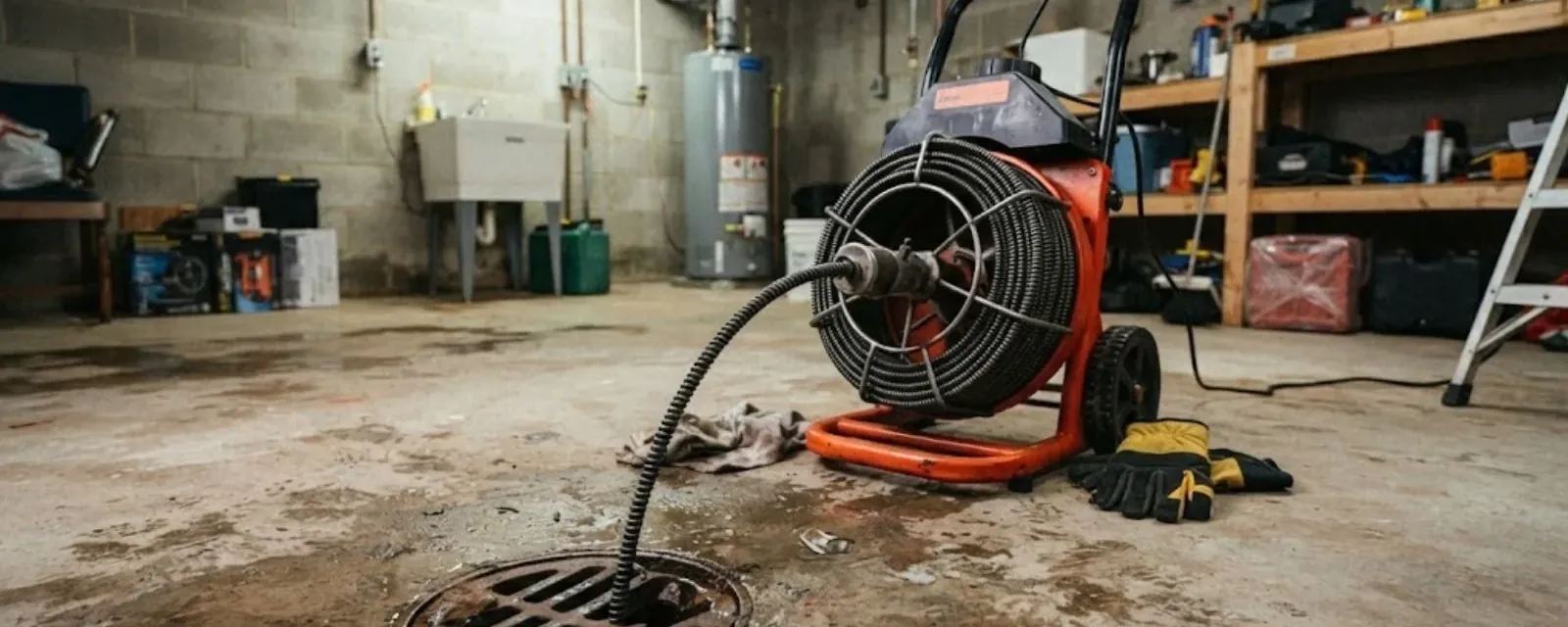
A hand-crank drain snake handles clogs a few feet past the trap. Feed it in slowly, crank to hook the plug, and pull it out. If you feel a solid block that will not move, stop forcing it. Pushing through a plug can compact it or scratch the pipe.
Eden Prairie local note: your tap water and your drains
The City of Eden Prairie softens its water with lime at the treatment plant. Untreated well water averages roughly 21 grains per gallon, and the tap averages about 5 grains per gallon. In practical terms, mineral scale inside your drain pipes is less likely to be the culprit than grease and hair.
The City does say calcium buildup can still appear on fixtures. It recommends cleaning that with vinegar or a calcium and lime remover. If your faucet aerator or showerhead looks chalky, soak it in vinegar, which is a better fix for that spot than boiling water in the drain.
How to tell what your pipe is made of
Look under the sink. White or black plastic with threaded slip nuts is PVC or ABS, and shiny chrome tube is metal, though the wall behind it may still be plastic. Cast iron is dark, heavy and rough, and usually shows up in older basements.
If you cannot tell, treat the pipe as plastic. That costs nothing and avoids a leaking joint behind a cabinet. A quick photo sent to a plumber on the phone often settles it.
When to stop and call
Stop when water stands in the sink for more than a few minutes after plunging, when a second fixture gurgles or backs up, or when the drain smells of sewage. At that point the clog is likely deeper than a hand tool reaches.
A plumber can run a cable machine, or use hydro-jetting to scour grease off the pipe wall with pressurized water. Our crews also offer full drain cleaning with a camera check when clogs repeat. We cover Minnetonka and Hopkins on the same 24/7 line.
What to do while a backup waits
If water is rising in a tub or floor drain, stop running anything that sends water down the drain. That includes the washer and the dishwasher. Keep kids and pets out of the wet area and move rugs and boxes away from the floor.
When the situation is urgent, call (952) 866-9120. Same-day appointments are offered when available, and our dispatch runs overnight and on weekends.
Drain pipe materials and their limits are set out in the Minnesota Plumbing Code, Minnesota Rules chapter 4714, and that standard is one more reason to check the pipe type before using hot water.
Eden Prairie homeowner questions
Yes, repeated boiling water can soften PVC and ABS and loosen glued joints. A single pour is less likely to cause trouble, but it is not worth the risk when safer options exist.
No. It can crack the porcelain bowl and does not clear paper or wipes. Use a flange plunger or a closet auger.
Hot tap water with dish soap is the gentlest choice for a grease clog. Baking soda and vinegar fizz but rarely clear a real clog, so do not count on them.
Give hot soapy water about fifteen minutes. If the water level has not dropped, switch to a plunger or hand tool instead of repeating the same step.
Less likely than grease or hair. The City says its tap water averages about 5 grains per gallon after softening, so heavy mineral scale inside drains is uncommon. Look first at what goes down the sink.