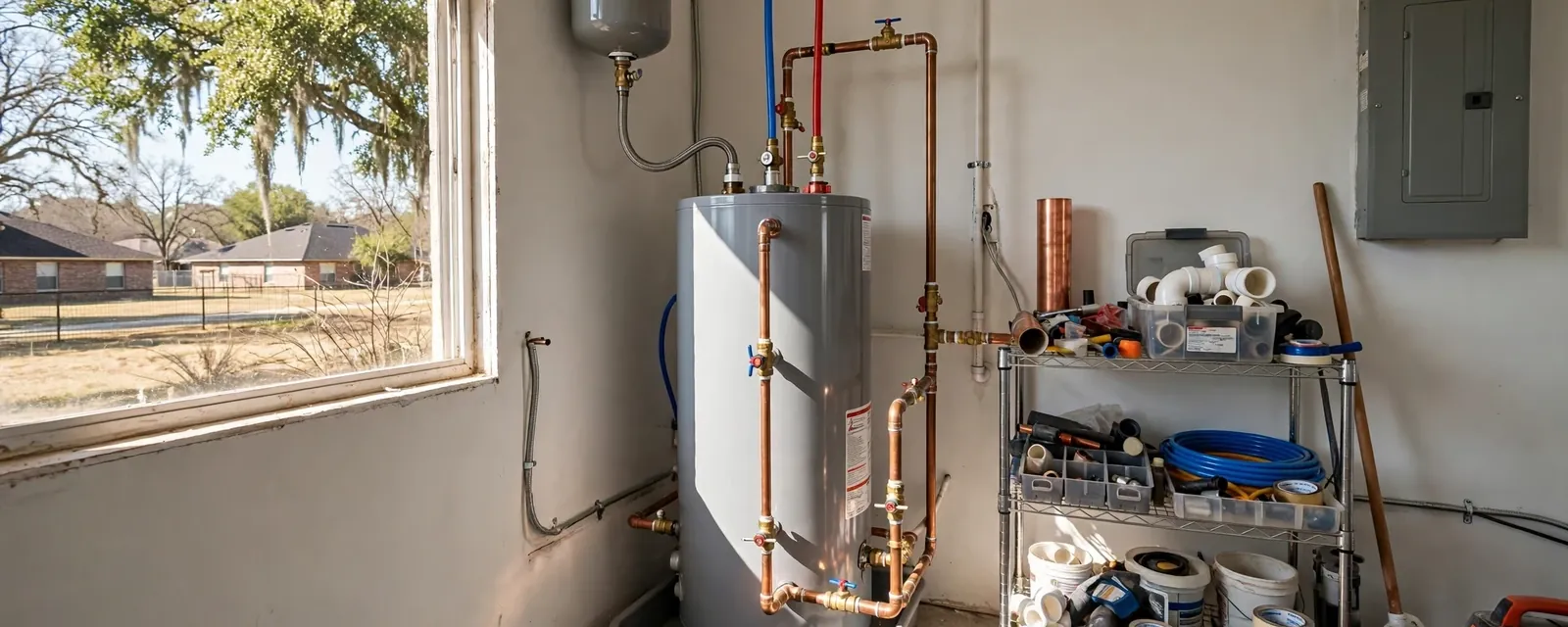
The cost of installing a water heater in Eden Prairie, MN depends mostly on what you are putting in, what must change to fit it, and what the job requires by way of permits. A straight swap of a same-size tank in the same spot is the simplest case. Anything that changes the fuel, the venting or the location adds labor and parts.
This guide lists the factors in plain words so you can read a quote without guessing.
What you are actually paying for
An installation bill covers four things: the heater, the connecting parts, the labor and the extras. The heater is the tank or tankless unit itself. The connecting parts include supply lines, shutoff valves, a discharge pipe for the relief valve, and gas or electrical fittings.
Labor covers draining and removing the old unit, setting the new one, making the connections, testing for leaks and gas tightness, and firing it up. Extras are things like the permit, an expansion tank and hauling the old heater away. Ask each to be listed on its own line.
Unit type and size set the starting point
A tank heater is the least expensive route. A tankless heater costs more to buy and install because it needs larger gas supply, special venting and sometimes a new circuit. A heat pump unit costs more again and needs room, airflow and a condensate drain.
Size matters. A family of five that runs a dishwasher, a washer and two showers back to back needs more capacity than two adults. Going up a size costs more, and so does picking a unit with a longer warranty or better insulation.
Our water heater installation crews size the unit to your household, not to the biggest box on the shelf.
Fuel and venting changes drive the largest jumps
Swapping gas for gas, or electric for electric, keeps the job small. Changing fuel brings in a gas line, a new circuit, a vent or all three. A gas heater needs a flue that carries exhaust outside, and a new model may need a different vent material or a longer run than the old one.
Condensing gas units, which pull more heat from exhaust, vent through plastic pipe and need a condensate drain. A tankless unit might need a new vent through the wall or roof. Each change adds parts, labor and sometimes a permit.
Access, location and the small parts that add up
A heater in an open utility room is easy. One in a tight closet, an attic or a crawl space takes longer to remove and set. Stairs add time because a full tank is heavy.
Small parts add up too. An expansion tank absorbs pressure when water heats in a closed system. New shutoff valves, flexible connectors, a drip pan and a drain line are routine. Old corroded fittings are cut out and replaced, which adds a little time. Water heater replacement usually includes these.
Rather have a plumber look at it?
Our 24/7 line is open now, and same-day appointments are available when a slot is open.
What a good quote should list
A quote you can compare names the brand and model, tank size or flow rate, fuel type and warranty terms. It lists the venting work, gas or electrical changes, the expansion tank, the discharge pipe, the permit and haul-away. It says when payment is due and what happens if the crew finds a surprise behind the old unit.
Vague quotes that read "install water heater" with a single total make comparison impossible. Ask for line items, and ask the contractor to explain any item you do not recognize. We give a clear price before work starts so nothing arrives as a surprise at the end.
| Quote line | What it covers | Question to ask |
|---|---|---|
| Unit and model | Heater purchase | What size and warranty are included? |
| Venting and fuel work | Flue, gas line, circuit | Does this change from the old unit? |
| Parts and fittings | Valves, tank, connectors | Which parts are replaced? |
| Permit and inspection | Paperwork and visit | Who pulls the permit? |
| Haul-away | Removal of the old unit | Is disposal included? |
Code updates and the permit question
An older heater may sit in a spot that no longer matches current standards. When you replace it, the installer may have to bring venting, relief piping or clearances up to what the Minnesota Plumbing Code, Minnesota Rules chapter 4714, calls for. We do not state those requirements here, and the right person to ask is the Eden Prairie building department.
Whether your job needs a permit varies. The City's Building Inspections Division issues the Sewer and Water Permit and lists rough-in visual, final, meter and air test inspections on that form, and a permit becomes void if the work does not begin within 180 days. Ask the building department which pieces apply to a water heater swap in your home.
DIY or a licensed plumber
A homeowner may do plumbing work on a house they own and occupy, if it meets the Plumbing Board's minimum standards and local ordinance allows it. Gas and venting work is where mistakes become dangerous, because a leaking gas line or a blocked flue can cause fire or carbon monoxide.
For that reason many owners hire out gas heaters even when they could do an electric swap alone. A licensed plumber also handles the relief valve discharge, the permit and the final check. If you are comparing towns, we cover Minnetonka and Chanhassen homes on the same 24/7 line, so call (952) 866-9120 and we will explain the scope before work starts.
Eden Prairie local note: licensing and permits
The Minnesota Department of Labor and Industry says a plumbing contractor must always have a licensed master plumber as its responsible individual and must keep a bond and insurance. Employees without a license work under direct supervision. DLI offers a license and registration lookup, which searches by the full license ID, so ask the contractor for theirs before you hire.
Under Minnesota Statutes 326B.46, a person without a plumber's license may do plumbing work that meets the Plumbing Board's minimum standards on premises they own and actually occupy as a residence, though a local ordinance may forbid it. In Eden Prairie, the Building Inspections Division issues the Sewer and Water Permit, so ask whether your job needs one.
Timing the replacement before the tank fails
A tank heater lasts roughly eight to twelve years. Signs of age include rust-colored hot water, popping or rumbling from sediment, moisture around the base and a pilot or burner that keeps going out. If your heater is near that age, planning a replacement lets you compare quotes calmly instead of in a flooded basement.
Scheduling during mild weather also helps. A crew that has room to work and parts on the truck finishes faster than one racing a failure at midnight.
Eden Prairie homeowner questions
Changing fuel, moving the unit, adding venting, tight access and extra parts such as an expansion tank. A tankless or heat pump unit also adds to both equipment and labor.
Not always. Ask whether haul-away and disposal are on the quote, and confirm who handles them.
It varies by job and by city. Ask the Eden Prairie building department, and ask your installer who will pull the permit.
State law lets an owner who lives in the house do plumbing work that meets the minimum standards, unless a local ordinance forbids it. Gas and venting are the risky parts, and many owners hire a licensed plumber.
Use the Minnesota Department of Labor and Industry license and registration lookup. It searches by the full license ID, so ask the contractor for it first.
Usually not. It often needs bigger gas supply, special venting or a new circuit, which raises installation labor.