The most common causes of clogged drains in Eden Prairie, MN homes are hair and soap scum in bathrooms, grease and food waste in kitchens, wipes in toilets, and tree roots or a sagging pipe in the building sewer. Which one you have depends on where the slow drain is. One slow fixture points to a local clog in that fixture's branch. Several fixtures backing up at once point to the main line.
Bathroom sinks and tubs: hair and soap film
Hair is the top cause of slow tubs and showers. Strands catch on the rough edge of the drain stopper or trap, then bind with soap scum into a rubbery plug that narrows the pipe a little more each week.
Bathroom sinks clog from toothpaste, shaving residue and hair that slips past the pop-up stopper. Pull the stopper and clean it with a bent wire or a plastic drain tool, which often fixes the problem in a few minutes. If water drains slowly again within days, the clog sits deeper in the trap or the branch pipe.
Kitchen sinks: grease, starch and food waste
Cooking fat is liquid when it goes down the drain and a waxy solid a few feet later, where the pipe is cooler. It coats the wall, catches coffee grounds, rice and eggshell bits, and forms a hard plug.
A garbage disposal grinds food into smaller pieces but does not make grease behave. Fibrous peels, pasta and potato skins swell and pack in the trap. Wipe pans with a paper towel before washing, and put cooled fat in a can for the trash instead of the sink.
Toilets: wipes, paper and the wrong items
Toilets are designed for waste and toilet paper. Flushable wipes, paper towels, cotton swabs, dental floss and feminine products do not break apart the way tissue does, and they snag in the narrow trapway inside the bowl.
A toilet that fills near the rim and drains slowly, or one that gurgles after a flush, often has a partial blockage. A plunger with a flange seal usually clears a paper clog. An item stuck in the trap may need a closet auger, and a toilet that clogs repeatedly deserves a look at the drain behind it.
Mineral scale and old pipe wear
Mineral scale builds up where hard water leaves deposits, though the effect is gentle in softened water. Corroded galvanized or cast iron pipes develop rough, flaking walls that catch debris and narrow the bore over time.
You can see scale as chalky rings around faucet aerators and showerheads. In pipes it is invisible until flow drops. If several fixtures slow down gradually over months, rather than suddenly, suspect internal buildup in the branch lines and ask a plumber about drain cleaning with a cable or a jetting tool.
Rather have a plumber look at it?
Our 24/7 line is open now, and same-day appointments are available when a slot is open.
Roots, belly and damage in the building sewer
The building sewer carries everything from the house to the main under the street. Tree roots seek moisture and enter through tiny gaps at joints, then thicken until they catch paper and grease.
A belly is a low spot in the pipe where water sits and solids settle. Damage from settling, a crushed section or an offset joint also catches debris. These causes keep returning no matter how often you clear the clog, because the pipe itself is the problem.
| Symptom | Likely cause | What to try first |
|---|---|---|
| One tub drains slowly | Hair and soap in the trap | Pull the stopper, clean it, use a drain tool |
| Kitchen sink backs up after dishes | Grease and food in the trap or branch | Hot soapy tap water, plunger, cable |
| Toilet clogs repeatedly | Wipes, a tight trap or a downstream issue | Closet auger, then a camera look |
| Basement drain gurgles when upstairs fixtures run | Main sewer line partly blocked | Stop water use and call |
One fixture or the whole house?
This split tells you the most. If only one sink or tub is slow, the clog is local and often within reach of a plunger or a hand tool. If the lowest fixture in the house, usually a basement floor drain or a shower, backs up while others drain slowly, the main is partly blocked.
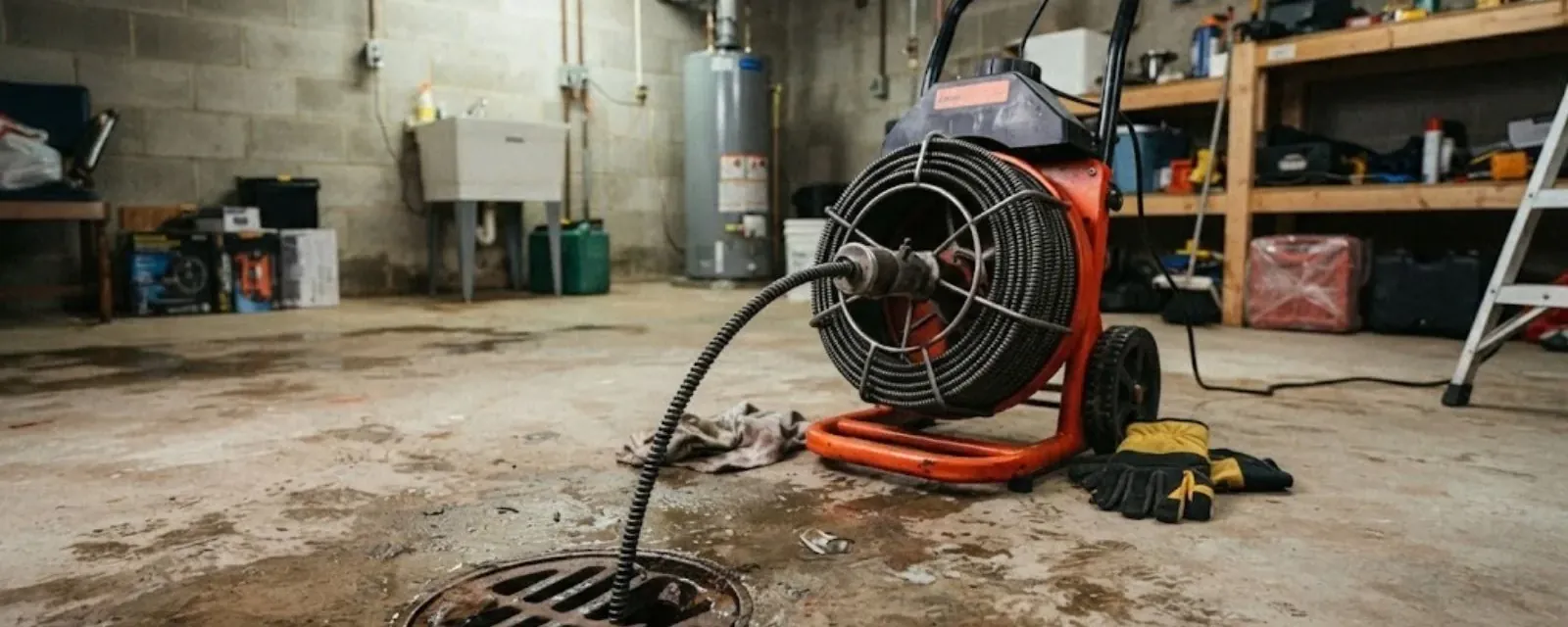
When more than one fixture is affected, stop running water. Flushing, laundry and dishwashing push more water toward a pipe that cannot take it. A plumber can clear the main with a cable machine or hydro-jetting, and our sewer line cleaning work follows the same order: clear, then camera, then fix.
Eden Prairie local note: reaching the right office
The City says its Utilities Division handles leak, meter and water shutoff questions on weekdays from 7 a.m. to 3:30 p.m. After 3:30 p.m. on weekdays and on weekends, it directs reports to the Police Department. If you think a blockage sits in the City main rather than your house, those are the contacts for the public side.
The City also reports growth from about 2,000 residents in 1960 to almost 60,000 in 2000. That means building sewers here come in many ages, from farm-era pipe to subdivision lines laid decades later. If your clogs keep coming back, the age and material of your own line are worth checking with a camera.
Habits that prevent most clogs
Prevention costs little and works better than any chemical. A few habits stop the majority of drain problems before they begin.
- Use a hair catcher in every shower and tub
- Scrape plates into the trash, not the sink
- Pour cooled fat into a can
- Flush only toilet paper and waste
- Run hot tap water for a minute after washing greasy dishes
Skip chemical drain openers when you can. They can sit in a stopped pipe, harm some fixtures and create a hazard for the plumber who clears the line afterward.
When to stop and call
A plunger and a hand tool are fair for single-fixture clogs. Stop when the clog returns within days, when a second fixture is affected, when the drain smells of sewage, or when water comes up from a floor drain.
We also handle calls in Hopkins and Chanhassen on the same 24/7 line. For a backup that is flooding a room, shut off water use, keep people clear of wet floors near outlets, and call (952) 866-9120.
Drain pipes and vents in Minnesota homes are covered by the Minnesota Plumbing Code, Minnesota Rules chapter 4714, which is the standard a plumber works to.
Eden Prairie homeowner questions
Grease may be coating the pipe farther down the line, where a plunger cannot reach. A cable or hydro-jetting removes the coating, not just the plug.
Hair mostly clogs the fixture's own trap and branch, where it binds with soap. It rarely reaches the main, though a mix of hair, grease and wipes can.
No. They stay intact far longer and catch on rough pipe, which is why plumbers pull them out of traps and lift stations. Bin them instead.
Often, yes. Gurgling means air is pulled through the trap because water cannot flow freely. It can mean a partial blockage or a vent problem.
The City says its Utilities Division handles these questions on weekdays during business hours, and that after 3:30 p.m. and on weekends reports go to the Police Department. A plumber can first check whether the blockage is on your side.